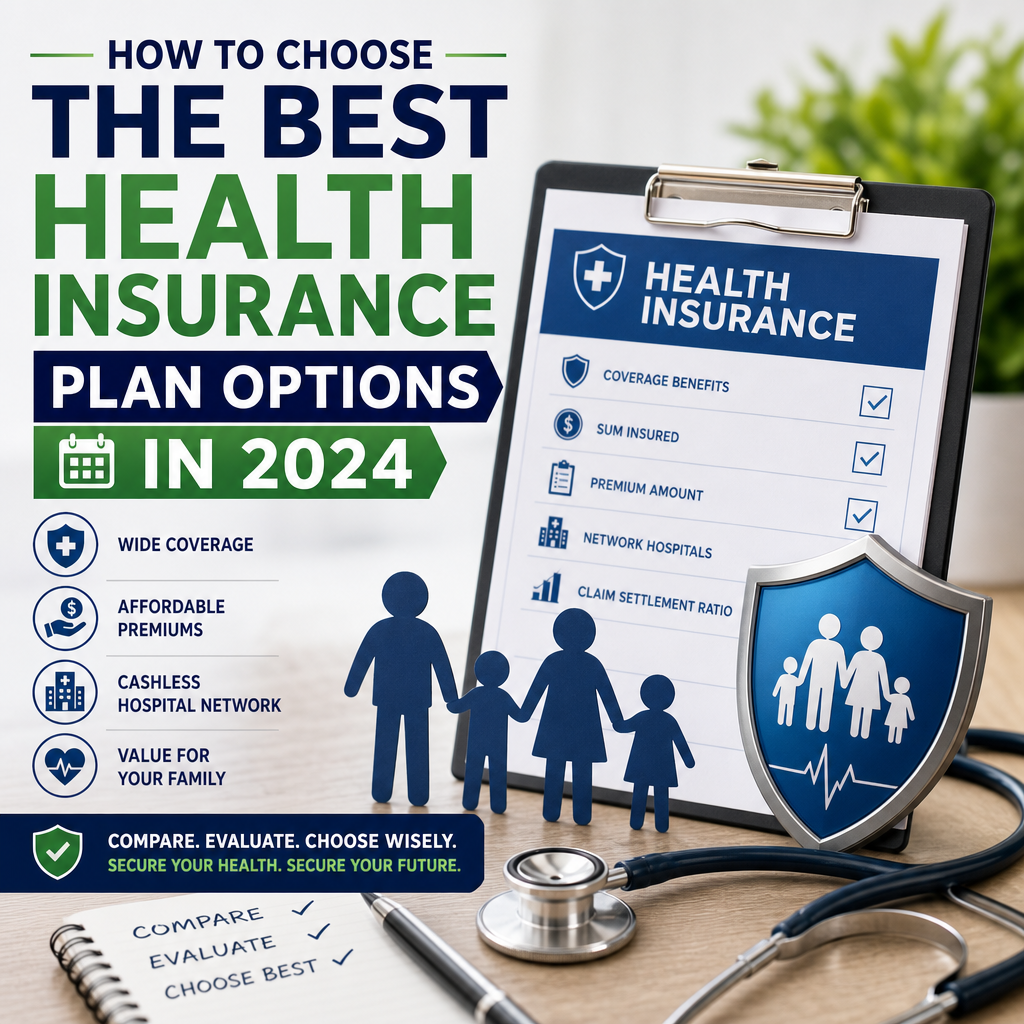
How to Choose the Best Health Insurance Plan Options in 2024
How to Choose the Right Health Insurance Plan
Choosing the right health insurance plan is a crucial decision that can significantly affect your well-being and financial security. With so many options available, understanding the different types of plans and their benefits can feel overwhelming. This guide will help you navigate health insurance plan options and select the one that best fits your needs.
Understanding Health Insurance Plan Options

Before diving into the selection process, it’s important to familiarize yourself with the common types of health insurance plans:
- Health Maintenance Organization (HMO): Requires you to choose a primary care physician (PCP) and get referrals to see specialists. Typically, HMOs have lower premiums but less flexibility.
- Preferred Provider Organization (PPO): Offers more flexibility in choosing healthcare providers and doesn’t require referrals, but premiums and out-of-pocket costs tend to be higher.
- Exclusive Provider Organization (EPO): Similar to PPO but only covers care within the network except emergencies.
- High Deductible Health Plan (HDHP): Often paired with a Health Savings Account (HSA), it has lower premiums but higher deductibles and out-of-pocket costs.
- Catastrophic Health Insurance: Designed for young, healthy individuals, covering essential health benefits after a high deductible is met.
Understanding these plan types will make it easier to evaluate your personal circumstances.
Assess Your Healthcare Needs
Choosing the right health insurance plan starts with a thorough self-assessment. Consider the following aspects:
1. Frequency of Medical Care
- How often do you visit doctors?
- Do you require ongoing treatment or prescription medications?
- Do you anticipate major health services such as surgery or specialist visits?
2. Preferred Doctors and Hospitals
- Are your preferred doctors in-network for the plan you’re considering?
- Is it important to have access to specialized care close to home?
3. Budget Constraints
- How much can you afford to pay in monthly premiums?
- Consider the out-of-pocket expenses such as deductibles, co-payments, and coinsurance.
Compare Costs Beyond the Premium
Many people focus solely on premiums when selecting a health insurance plan, but this can lead to unexpected expenses. When reviewing health insurance plan options, consider:
- Deductibles: The amount you pay before your insurance starts to cover costs.
- Co-pays and Coinsurance: Your share of medical costs for doctor visits, prescriptions, and hospital stays.
- Out-of-Pocket Maximums: The maximum amount you’ll pay in a year, after which the insurance covers 100% of costs.
- Coverage Benefits: Check for coverage of medications, mental health services, preventive care, and specialist visits.
Evaluate the Network Size and Quality
A plan’s network directly affects your access to care:
- Verify if your preferred healthcare providers are in-network.
- Consider network size—larger networks typically offer more choices.
- Research the quality and reputation of hospitals included in the plan.
If continuity of care with a specific physician is important, ensure that the plan accommodates this.
Look for Additional Benefits
Many health insurance plans include perks that add value beyond basic coverage:
- Wellness programs or fitness discounts
- Telehealth services
- Coverage for alternative treatments like acupuncture or chiropractic care
- Access to counseling or mental health support
These extras might help improve your overall healthcare experience.
Use Online Tools and Resources
Several resources can assist you in comparing health insurance plan options:
- Employer benefits portals often provide plan summaries and cost comparisons.
- Government marketplaces, like Healthcare.gov, offer detailed plan information during open enrollment.
- Independent comparison websites allow side-by-side analysis of premiums, deductibles, and coverage.
Make use of these tools to make an informed decision.
Final Tips for Choosing the Right Plan
- Don’t rush: Take time to review each plan thoroughly.
- Seek advice: Consult insurance experts or brokers if unsure.
- Review annually: Your healthcare needs and plan options might change every year.
- Read the fine print: Understanding the terms and exclusions avoids surprises later.
Conclusion
Selecting the right health insurance plan is all about aligning your healthcare needs, budget, and preferences with the options available. By carefully evaluating plan types, costs, networks, and extra benefits, you can find the coverage that offers the best value and peace of mind. Remember, the right plan can protect your health and finances when you need it most.