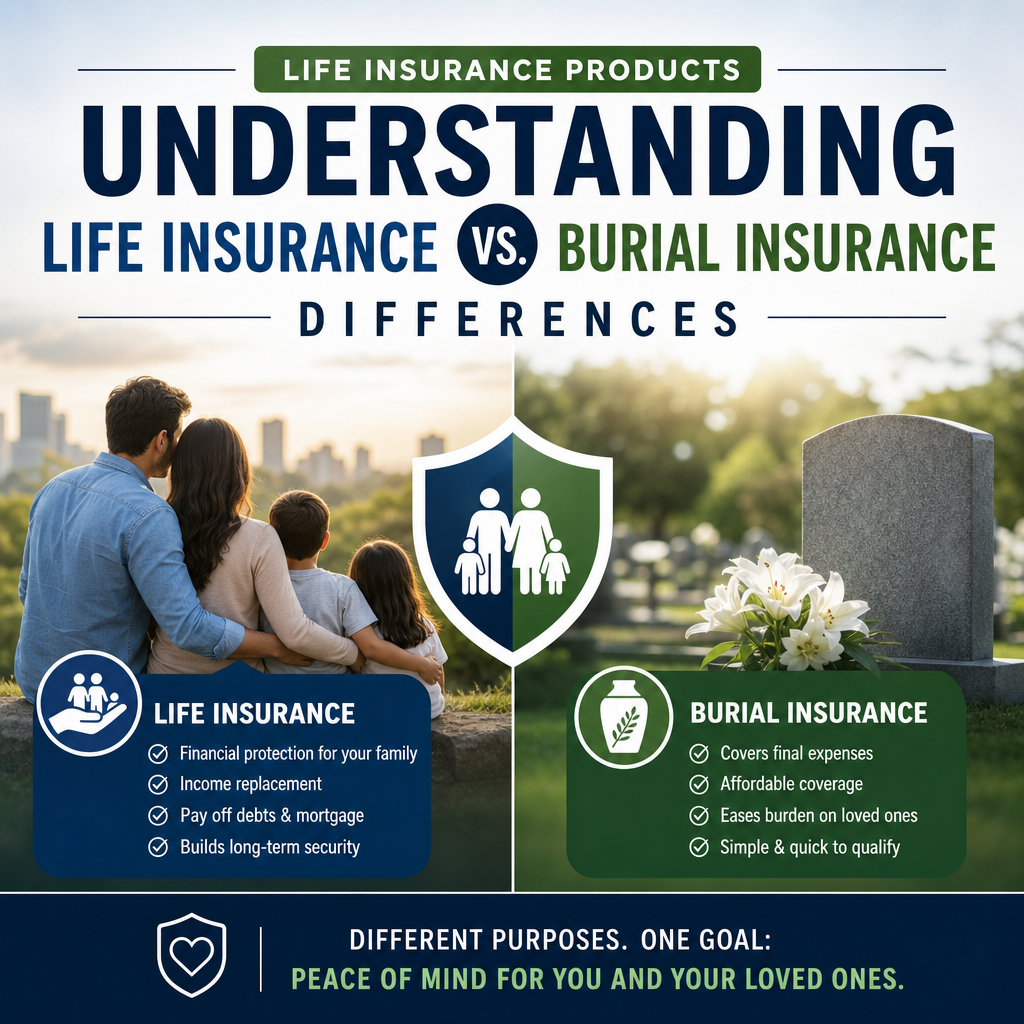
Life Insurance Products: Understanding Life Insurance vs. Burial Insurance Differences
Life Insurance vs. Burial Insurance: What’s the Difference?

When planning your financial future and protecting your loved ones, understanding the variety of life insurance products available is essential. Two common options people often consider are life insurance and burial insurance. While they might seem similar at first glance, they serve distinct purposes and come with different features.
In this article, we’ll break down the key differences between life insurance and burial insurance to help you make an informed choice that suits your needs.
What is Life Insurance?
Life insurance is a financial product designed to provide a lump sum payment, known as a death benefit, to your beneficiaries when you pass away. Its main purpose is to offer long-term financial protection for your loved ones.
Types of Life Insurance Products
There are two primary types of life insurance products:
- Term Life Insurance: Coverage for a specific period (e.g., 10, 20, or 30 years). If you die during this term, your beneficiaries receive the payout.
- Whole Life Insurance: Permanent coverage that lasts your entire life and includes a cash value component you can borrow against.
Key Benefits of Life Insurance
- Income Replacement: Helps replace lost income, especially if you have dependents.
- Debt Coverage: Can be used to pay off mortgages, loans, or other outstanding debts.
- Estate Planning: Assists in passing wealth to heirs and covering estate taxes.
What is Burial Insurance?
Burial insurance, sometimes called final expense insurance, is a type of insurance specifically designed to cover funeral, burial, and related end-of-life expenses.
Characteristics of Burial Insurance
- Smaller Coverage Amounts: Typically ranges from $2,000 to $25,000.
- Simplified Underwriting: Often requires no medical exams; approval is based on a health questionnaire.
- Permanent Coverage: Usually a whole life policy that remains in force as long as premiums are paid.
What Burial Insurance Covers
- Funeral and burial costs
- Cremation expenses
- Memorial services
- Other related final expenses
Life Insurance vs. Burial Insurance: Key Differences
| Feature | Life Insurance | Burial Insurance |
|---|---|---|
| Purpose | Broad financial protection & income replacement | Specifically for funeral and final expenses |
| Coverage Amount | Can be high (hundreds of thousands or more) | Usually low (a few thousand to $25,000) |
| Policy Duration | Term or whole life options | Typically whole life insurance |
| Medical Requirements | May require medical exam or detailed health info | Simplified underwriting, often no exam |
| Premium Cost | Generally higher, based on age & health | Lower, designed for affordable final expense coverage |
Which One is Right for You?
Choosing between life insurance and burial insurance depends on your individual goals, financial situation, and concerns about your family’s future.
Consider Life Insurance If:
- You want to provide significant financial support for your family.
- You have dependents who rely on your income.
- You want coverage that can help with debts, education costs, or estate planning.
- You are comfortable undergoing medical underwriting for potentially lower premiums.
Consider Burial Insurance If:
- You want to ensure your funeral and burial expenses are covered without burdening your family.
- You prefer a simple, affordable policy with minimal health requirements.
- You do not need large death benefits or income replacement.
- You want guaranteed coverage regardless of your health status.
The Role of Life Insurance Products in Financial Planning
Both life insurance and burial insurance are important life insurance products that play unique roles in comprehensive financial planning. Many people choose to have both types to cover different aspects of their end-of-life needs and to provide peace of mind.
When considering insurance, take time to assess:
- Your current financial obligations
- The financial needs of your beneficiaries
- Your health and underwriting preferences
- The long-term affordability of premiums
Final Thoughts
Understanding the difference between life insurance and burial insurance helps you select the right protection for you and your family. While burial insurance offers a focused, affordable way to cover final expenses, life insurance products provide broader financial security over the long term.
Review your personal circumstances and consult an insurance professional to find the best fit. Doing so will ensure your loved ones are protected and that your wishes are honored when it matters most.