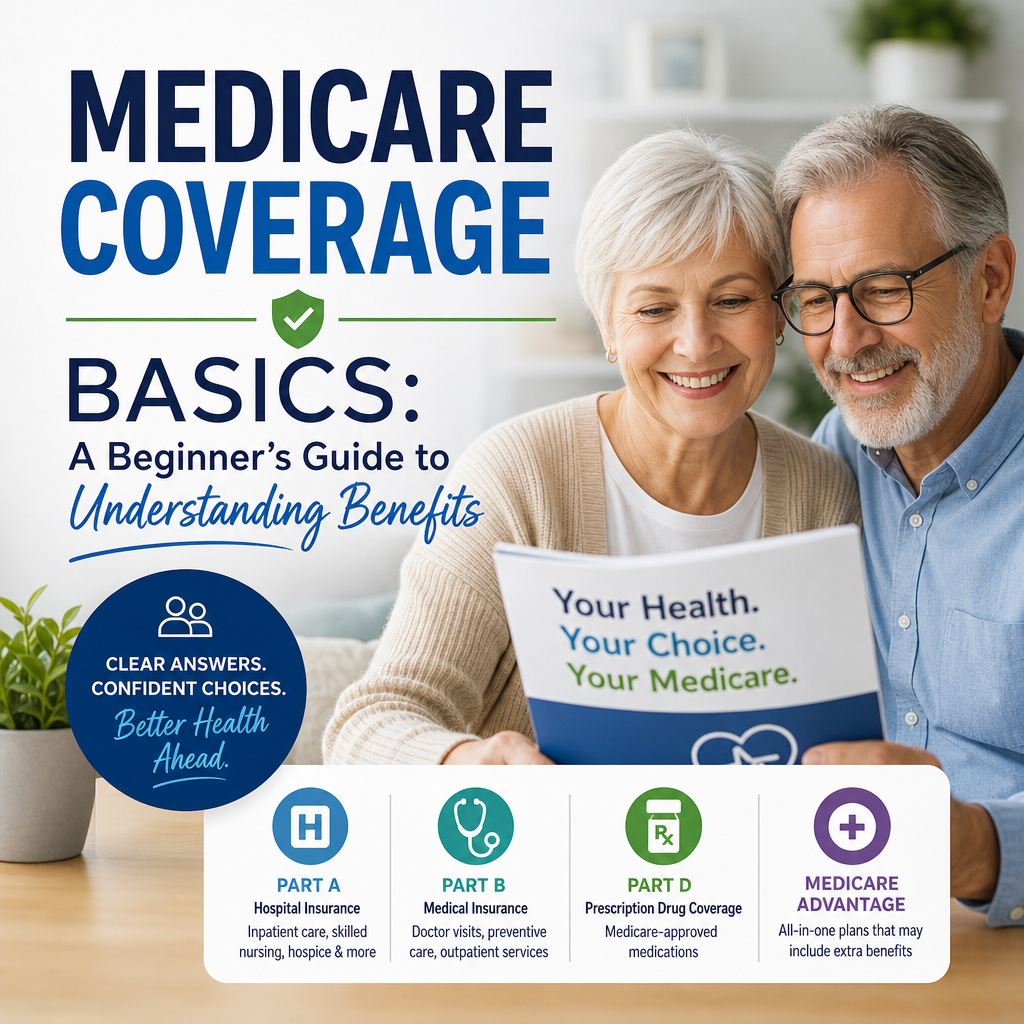
Medicare Coverage Basics: A Beginner’s Guide to Understanding Benefits
Understanding Medicare Basics for Beginners
Navigating the world of Medicare can be overwhelming, especially for those encountering it for the first time. Whether you’re approaching eligibility age or helping a loved one, understanding the basics of Medicare coverage is essential. This guide breaks down the core components of Medicare to help you make informed decisions.
What Is Medicare?

Medicare is a federal health insurance program primarily designed for individuals aged 65 and older. It also covers some younger people with disabilities and those with End-Stage Renal Disease (ESRD). The program helps cover medical costs, but it is not free and does not cover everything.
The Four Parts of Medicare Coverage
Medicare coverage is divided into four main parts, each serving a particular purpose in healthcare:
Part A: Hospital Insurance
Part A covers inpatient hospital stays, skilled nursing facility care, hospice care, and some home health services. Most people do not pay a premium for Part A if they or their spouse paid Medicare taxes while working.
- Covers: Hospitalization, inpatient care, hospice
- Typically premium-free for most beneficiaries
- Deductibles and coinsurance may apply
Part B: Medical Insurance
Part B helps cover doctors’ services, outpatient care, preventive services, and some home health care. Unlike Part A, Part B usually requires a monthly premium.
- Covers: Doctor visits, outpatient services, preventive care
- Requires monthly premium
- Deductibles and coinsurance apply
Part C: Medicare Advantage
Part C is an alternative way to receive your Medicare benefits through private insurance companies approved by Medicare. These plans often combine Part A, Part B, and sometimes Part D (prescription drug coverage) into one plan.
- Offers all-in-one coverage (hospital, medical, and sometimes prescription drugs)
- May include extras like vision, dental, and hearing
- Often requires using plan network providers
Part D: Prescription Drug Coverage
Part D provides prescription drug coverage, helping to lower the cost of medications. It is offered by private companies approved by Medicare and usually requires a monthly premium.
- Covers: Prescription medications
- Requires enrollment and monthly premium
- Helps reduce out-of-pocket drug costs
How to Enroll in Medicare
Enrollment in Medicare typically begins three months before you turn 65 and continues for seven months. You can sign up online, by phone, or in person at your local Social Security office.
Initial Enrollment Period (IEP)
- Starts 3 months before your 65th birthday month
- Includes your birthday month plus 3 months after
- Critical window to avoid late enrollment penalties
General Enrollment Period
- Runs from January 1 to March 31 each year for those who missed IEP
- Coverage begins July 1
- May include a late enrollment penalty
Special Enrollment Periods
Available under specific circumstances, such as losing employer coverage.
Understanding Costs Associated with Medicare Coverage
While Medicare helps pay for medical expenses, some costs remain:
- Premiums: Monthly fees for Part B, Part C, and Part D
- Deductibles: Amount you pay out-of-pocket before coverage kicks in
- Copayments and Coinsurance: Your share of costs after deductibles
It is important to budget for these expenses when planning your healthcare.
How to Choose the Right Medicare Coverage
Selecting the most suitable Medicare coverage depends on your healthcare needs and budget:
- Evaluate Your Health Care Needs: Consider your typical doctor visits, prescriptions, and whether you need dental, vision, or hearing care.
- Compare Plans: Look at costs, network providers, and coverage benefits.
- Check Drug Formularies: Ensure your medications are covered under Part D plans.
- Consider Additional Coverage: Medigap policies can help cover gaps in Original Medicare.
Tips for Medicare Beginners
- Start Early: Research and enroll during your Initial Enrollment Period to avoid penalties.
- Ask Questions: Don’t hesitate to contact Medicare or a trusted advisor.
- Review Yearly: Medicare plans can change, so review your coverage each year during the Open Enrollment Period.
- Use Official Resources: Visit Medicare.gov for reliable information and plan comparisons.
Conclusion
Understanding Medicare basics is a vital step toward securing the healthcare coverage you need as you age or face qualifying disabilities. By familiarizing yourself with the different parts of Medicare coverage, enrollment periods, and associated costs, you can make smarter choices that fit your health and financial situation. Remember, the right Medicare plan can provide peace of mind and help keep you healthier in the years ahead.